
Panic and Overreaction to Suspected AI Slop in Fiction Writing
The Cat Herd of Writers

Two adages that are not true:
You can’t herd cats;
Writers are all individuals;
So Jetse, you can herd cats? How? Well, give me a number of cats—the moment I open a tin can of, say, sardines, all cats within smelling distance will follow me. Easy. Similarly, give me a large dog trained to chase cats and all cats will scatter like crazy. Just as easy. So yes, there are most definitely ways to herd cats.
In a related manner, each and every writer likes to think they’re a unique individual (which is why most have cats, BTW). Gentle people, on top of that, polite to a fault (in their own image). Until word gets around that a traditionally published writer has used AI while writing their published novel. Then all those unique writers—‘we are all individuals1’—become a chanting horde of pitchfork wielders ready to burn the offending writer at the stake. No nuance. No careful consideration. No, the sinner must either be punished, or ‘fall to your knees and repent if you please2’.
The online demonisation of Mia Ballard was a shameful spectacle. So let’s take a step back.
Consider:
It is physically impossible to demonstrate if a piece of writing is AI-generated;
Bad writing by humans can be extremely successful (see: The Da Vinci Code and Fifty Shades of Grey)3;
While most writers look down on people blindly following the next TikTok trend, they behave exactly the same when they think a writer—especially one who’s traditionally published, and when they’re successful in particular—has broken certain unwritten rules;
On top of that: where do we draw the line? Does having your writing checked by, say, Grammarly4, make it AI-generated? If the writer used AI for research, is it then AI-generated? If a writer has had a single sentence polished up by an LLM, is the whole piece then AI-generated? What about ten sentences in a whole novel? Some leeway? Zero tolerance? Problem is nobody has clearly defined this—to the best of my knowledge—yet. And actually, we shouldn’t.
On top of that, I’m aware of several people who are dyslexic to a certain degree, and who wouldn’t be able to write at all without help from an AI. So while their writing is—out of necessity—partly AI-generated, I think it is still their writing5. As you can see, it’s not as clear-cut as it seems.
Therefore, a hard definition doesn’t work. We need to judge this case by case. If we writers like to be seen as unique individuals, then we should judge our peers as unique individuals, as well. There is no ‘one-size-fits-all’ approach to the usage of AI for writing. Also, I prefer to consider everybody innocent until proven guilty. Many writers have written—often intensely compellingly—about the horrible consequences of witch hunts. That’s why we should not incite those. Not at all. Under no circumstances.
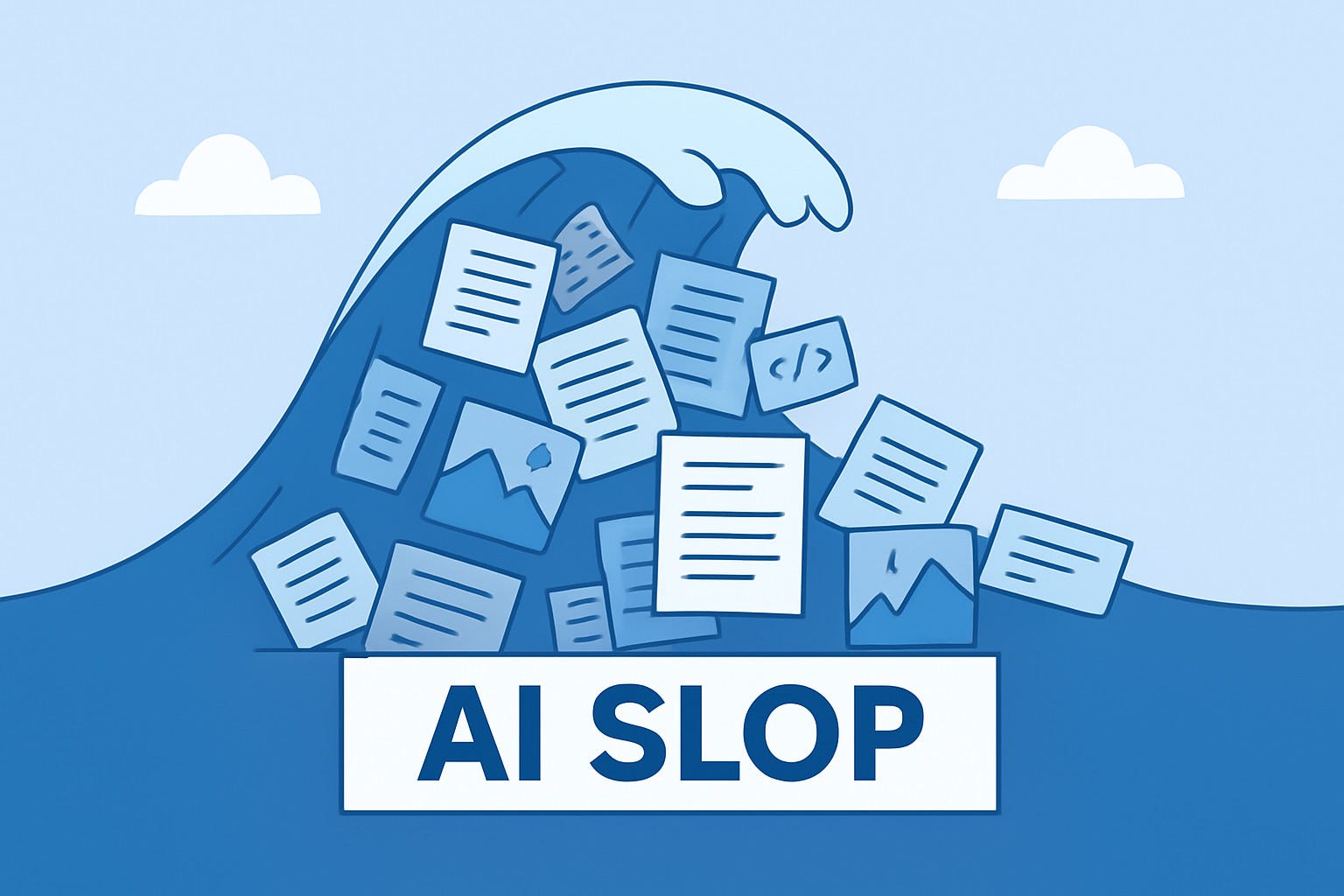
But what’s to stop certain unscrupulous individuals to flood Amazon and other self-publishing outlets with AI slop? Not much, and it’s already happening while counteractions are underway. For one, the time of ‘free’ self-publishing is over (or will soon be)6. Meaning that getting your novel on Amazon c.s. will cost you something (say, a few dollars), which should prevent people only producing AI slop from putting hundreds of them up7.
A few important distinctions:
AI detection tools do not work. Their success rate is laughable, would not pass muster in any proper academic or commercial environment (See also: “AI-Detection, Part 1”);
AI trying to detect if the writing is human-made equally does not work. That success rate is just as laughable (See also: “AI-Detection, Part 2”);
I strongly suspect it will be impossible to demonstrate that a piece of writing is AI-generated in a court of law. Best of luck with that;
Similarly, it will become equally impossible to prove with 100% certainty that something is fully human-written in a court of law8;
Therefore, as I registered the copyright for my novel The Replicant, the Mole & the Impostor in 2020, I can demonstrate it is 100% human-written, as chatGPT was released to the public on November 20, 2022. However, for my latest finished novel—Divine Denouements & Celestial Silhouettes—I cannot prove beyond any doubt that it is 100% human-written (even if I registered its copyright in 2026). You will have to take my word for it, or read it and use your own judgment.
Nevertheless, I think it’s more important than ever to register the copyright of your completed novel—not just to prove ownership in case someone or some entity tries to steal it, but also to have some burden of proof in case ongoing litigation against scraping of AIs (never mind if it’s for training or not) might become successful (such as the case against Anthropic).
In the meantime, as writers raise hell about the sanctity of human writing, supposedly several literary agents and (possibly) publishing enterprises use AI to go through their slushpile (according to gossip on certain social media). I can’t prove this, of course—hence the weasel word ‘supposedly’—yet I wouldn’t be surprised if it’s happening already. Not at all.
What to do about this? Not much, I’m afraid. You can head your MS with the disclaimer ‘no scraping by AI allowed’, yet how do you prove that this agent or that publisher didn’t use them, anyway, in a court of law? Answer: you can’t.
Only thing that might make a (small) dent is starting a publishing company9 that swears on their parents’ sanctity or grave that they will do everything in their ability to ensure the novels they’re publishing are human-written. Note: get a sponsor with very deep pockets and unlimited patience.
Inevitably, as this panic about AI slop spreads, there are the scams. Such as websites that will ask a fee so that they can demonstrate—through curators, algorithms, handwavium and other inscrutable methods10—that your writing is truly 100% human made. Hint: don’t waste your money, as whatever proof they manage to conjure up will—I’m willing to bet—not stand in a court of law11. Use the money you didn’t spend on that nonsense on advertising your novel instead12.
Finally, we come to the most ironic part; that is, the paradox of discovery. Until recently, the main deciders on online discovery were Google’s search algorithm13 and Amazon’s discovery algorithm14. Increasingly, it’ll be AIs who decide the discoverability of your product. As such, the self-published writer will be caught between the devil of their novel being scraped by AIs in order to enable discovery or the deep blue sea of shielding it from AI, meaning nobody online will know it exists. Advertising will not help if your product is not visible or searchable.
Best practice? Hell if I know. Pushed hard, I’d reckon write the novel, register its copyright, throw it to the AI wolves, then advertise it in the hope it gets noticed and sells. Far from ideal, I know. If anybody knows a better way—apart from getting a publishing contract with a six-figure advance15—then I’d love to hear it.
Welcome to the brave new AI-slop world of publishing. Even if it’s barely distinguishable from Hell, we still shouldn’t incite witch hunts. We should be better—much better—than that.
Quick to judge
Quick to anger
Slow to understand
Ignorance and prejudice
And fear
Walk hand in hand
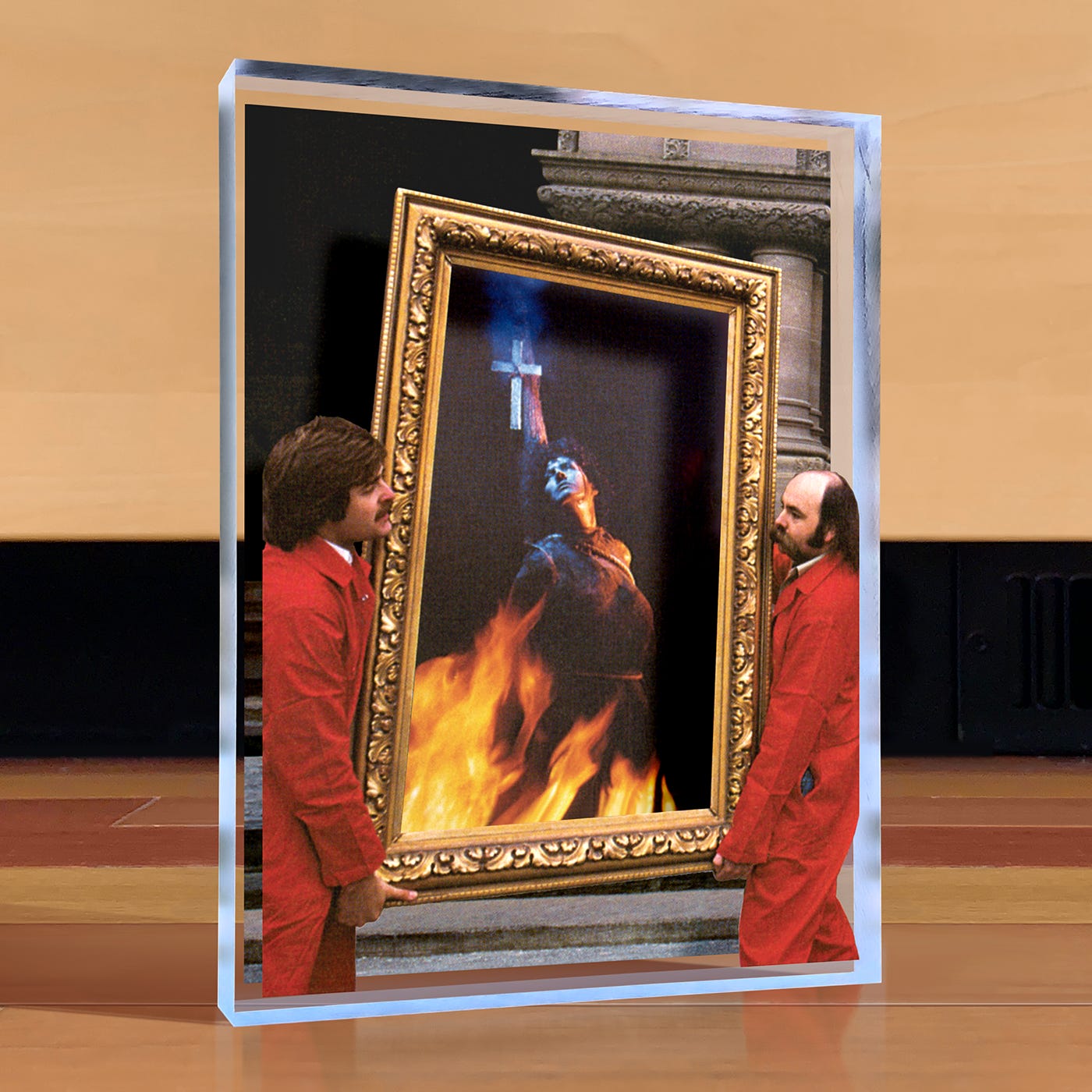
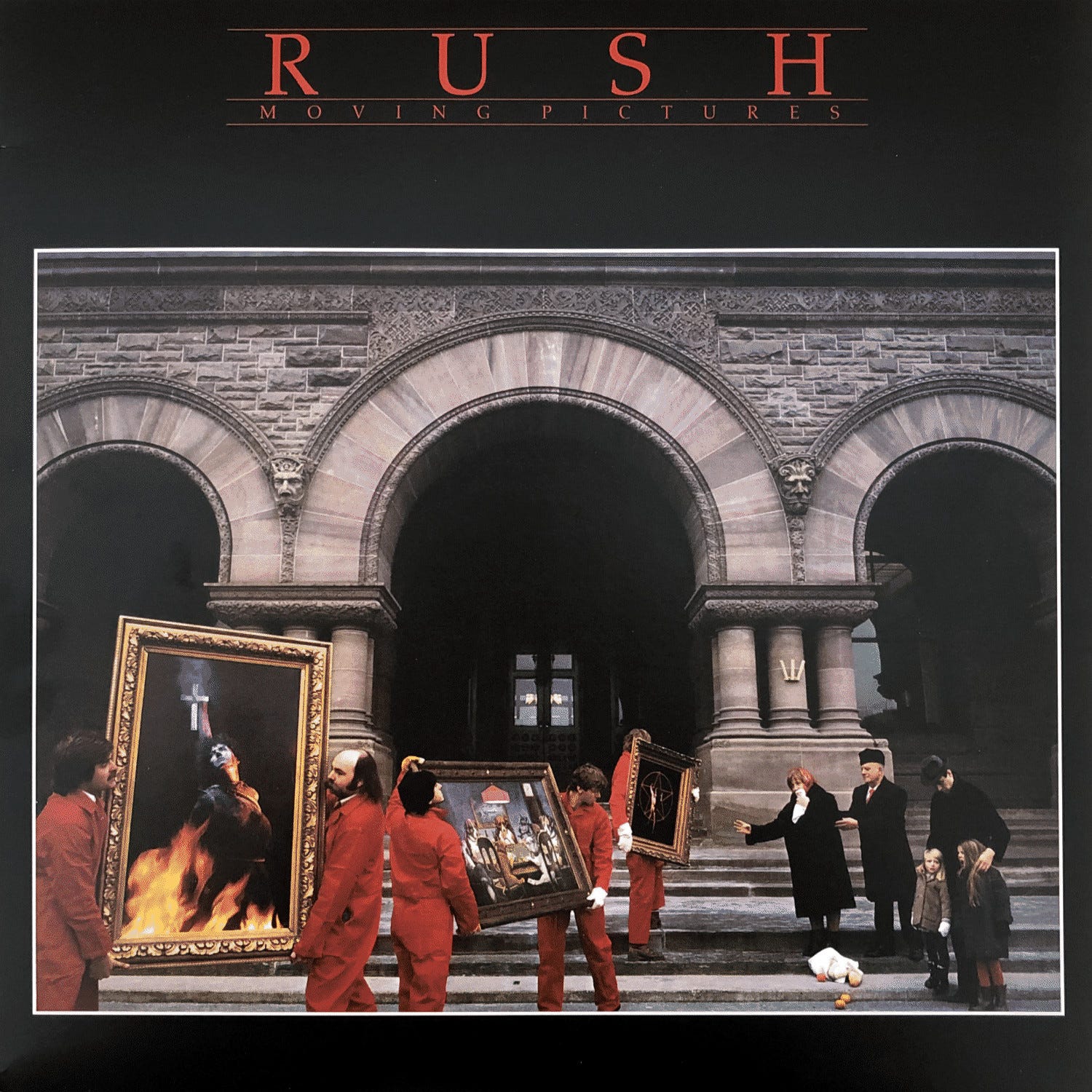
As the late, great Neil Peart had it in “Witch Hunt” (from Rush’s album Moving Pictures)
Support this writer:
Like this post!
Re-stack it using the ♻️ button below!
Share this post on Substack and other social media sites:
Join my mailing list:
Author’s note: I’m on holiday in Spain, but I’ve written this just before I went there. Needed to get it off my chest, so to say. Expect only the ongoing serialisations over the next couple of weeks as I try to relax and work on the next novel (which is my idea of a holiday, so go figure).
Welcome to the new followers, and many thanks for reading!
Brian trying to talk sense into his followers in Monty Python’s Life of Brian;
From “Exciter” by Judas Priest;
Both released before LLMs as we know them existed, and far from the only examples;Both released before LLMs as we know them existed, and far from the only examples;
And there are plenty of alternatives to Grammarly;
For the same reason, athletes partaking at the Paralympic Games are still athletes, despite the fact that they use specific tools;
This is also highly relative. If you, as a total unknown entity, self-publish a novel on Amazon c.s. but you do not advertise it, chances are your sales are zero. And this is just the act of making your novel available. Before you get to that point, it’s highly advisable to get it copy-edited or proof-read, obtain artwork (preferably from an actual artist), get cover design, etcetera;
Which, IMHO, should have been done to email from the start. Charge one cent per email and you kill spam and prevent every online vendor from adding you to their mailing list unasked;
Only if you have written it before the advent of LLMs—say, November 2022 (when chatGPT became accessible to the public at large)—and have registered your work at a certified institution like the US or EU copyright offices. After the year LLMs became accessible to the public, all bets are off;
Call it ‘The Human Factor’ or ‘The Human Equation’ or suchlike;
Including, I kid you not, the usage of AI;
Which is ultimately the only place that counts;
Or a nice cup of coffee;
Which, as people like Cory Doctorow have pointed out, has completely enshittified;
Ibid;
It’s what all of us writers want, but remains forever out of reach for the utmost majority;