
Blue—Red—Green, Part 3
A Lerxt in Cyberland


‘Every advantage has its disadvantage’—as a wise man had it, and it was proved when neural networks started to display erratic behaviour and unexpected error modes. Since nobody knew how they worked, neither did anybody have any idea how to fix them.
As neural network failures became more frequent and more catastrophic, it was decided to use a neural network—with access to all available cloud computing resources—to troubleshoot the failing neural networks.
It inevitably led to the great global internet breakdown of March 26, 2027.
– History of the Rise and Fall of Neural Networks
The three of them met in Dr. Michio Nakamura’s virtual conference room. Neither was aware of each other, and only Dewi Kamadjojo had heard of the director of the Nippon Cloud Computing Institute.
“A crisis, or better, an avalanche of crises is developing,” Dr. Nakamura said, “as neural networks world-wide develop unforeseen failure modes. Maybe some of you have noticed?”
“If you mean an unprecedented number of car crashes,” Dewi said, “then yes.”
“Is a wrongly delivered medical prescription part of a crisis?” George wondered. “As I’ve experienced one and noticed that many other happened at the same day.”
“Add ‘drones falling from the sky’ to that,” Marta said, glancing at her smartphone, “and the other issues also popped up in my newsfeed. But what has that got to do with me, or the others?”
“Everything,” Nakamura said and flashed a benevolent smile, “we think you can be part of the solution.”
This silenced the three, even the talkative Marta. Dr. Nakamura went on to explain. The Nippon Cloud Computing Institute, together with neural network companies around the world had already spotted the first signs of the impending crises. Then they scrambled for solutions.
On the one hand, they wanted to tweak the algorithms, change the architecture of the affected cloud computing nodes. But that would, most probably, impact their effectiveness, destroy what made them work. So, they decided to fight fire with fire; that is, design a neural network to analyse and troubleshoot the malfunctioning neural networks.
This backfired in a spectacular fashion. At first, some results did come in, and the investigative neural network gave a few tantalising glimpses into what made its peers tick, but eventually ate up all available computing resources, causing a world-wide internet crash.
As the world slowly came back online on March 27, 2017, Dr. Nakamura’s team figured in this case the treatment was worse than the disease. So, they decided to take a different approach.
“Therefore,” he said, “we need humans to venture forth into the affected neural networks. We resurrected the diagnostic neural network temporarily—while keeping a close eye on its resource usage—to find out which humans were most suitable to this task. You were in the top ten.”
“Where are the other seven?” Marta’s proclivity to see all the details all the time was irrepressible.
“They declined our invitation for a variety of reasons. Not interested, conflicting schedules, even a single unwillingness to help.” The faintest hint of disappointment echoed deep within Dr. Nakamura’s voice. “You can be our first line of attack.”
“First?” Dewi said with a smile. “There are more?”
“Obviously, we are arranging for back-ups,” Nakamura said, “but we really hope you are willing to oblige us.”
Dewi, George, and Marta all acquiesced with a sense of duty mixed with curiosity, opportunism, and ambition. Experimental MRI helmets together with other immersion-enhancing equipment had already been fast-forwarded their way (time was truly of the essence in these crises), and within minutes local technicians arrived at Dewi’s, George’s, and Marta’s houses to set them up.
Once connected to the bleeding edge VR-equipment, software avatars of Dewi’s, George’s, and Marta’s, well, quintessence were launched into the respective neural networks. Dewi’s avatar was sent into the realms running the self-driving neural networks. George’s ghostly essence was unleashed upon the distributed centres of the pharmaceutical clouds. Marta’s ethereal icon was inserted into the wide-stretched, virtual spider-webs of the drone control hubs. Where encountered dragons of a different kind.
Being inserted into the operating system of a massive, cloud computing, neural network is like ascending into a timeless space, like being immersed in an eternal now. Things move so fast that the past is an ethereal ghost— important a nanosecond ago but acknowledged and processed in the blink of an omniscient eye and gone already. The future is so uncertain, so mired in a massively expanding, intractable matrix whose event horizon is mere iterations away that looking far into it is both impossible and highly impractical. The now, the ever-changing while snapshot-frozen moment is the only thing that counts. Time is an illusion—suspended, frozen and forgotten.
Dewi floats in a space where all types of information become qualia of the cloud computing kind. Inputs are digits become numbers become intuitions evolved over subjective eons of number-crunching iterations.
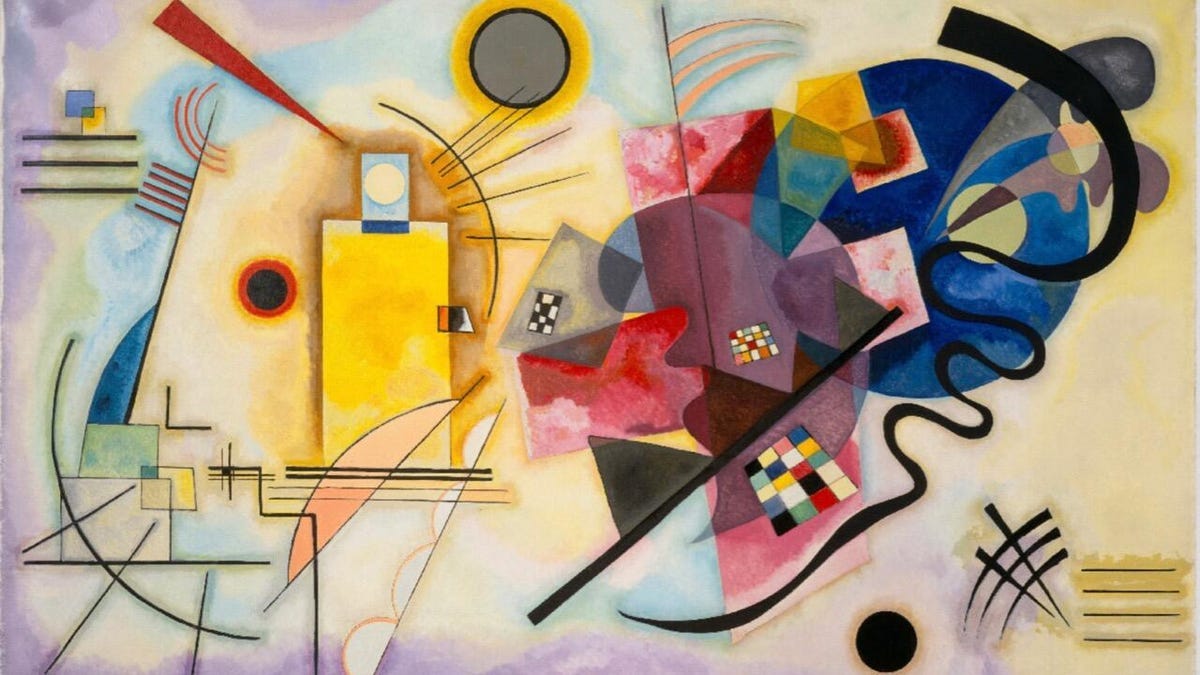
Roads are like nerves like flows like conduits that need to be filled just right. Cars are like signals like electrons like feelings that want to be good. Traffic is a prime mover, a movement primed, an emergent that wants to keep moving. Weather is a cushion, an immersion, an omnipresent variable to be adapted to.
Far from a cold, number-crunching computing process the whole is something other, a heady mix of properties, qualities, and transformations that flow into each other yet are somehow distinct; that are connected yet somehow singular; that are the many yet are the one.
there were
all shapes speak colours fall feelings leak
a blue wall cracked with fear
I saw a crude sound
An aroma arose from the cosmic background
Yet something tugs at her fine-honed scientific intellect. What happens here is inherently uncanny, so strange it beggars description. But Dewi is no stranger to the quintessential strange. Her research dances on the edge of the mysterious behaviour of quantum mechanics and the near-infinite possibilities of biology. But no matter how multitudinous the life sciences are, no matter how ineffable the physical sciences appear, both do follow certain basic rules, obey certain fundamental laws.
Not so for the inner workings of this neural network. It is so intensely goal-oriented that it will bend the rules to its will. And if the rules can’t be bent, they will either be changed or totally ignored. Then new rules will be applied and iterated until the neural network gets to the point where a certain algorithm—no matter how complex, weird and self-contradictory it is—performs the task it desires. It turns its inner virtual reality to its will, until it performs as it pleases.
As such, the way it all appears to work, the je ne sais quoi, the grand designs implemented all feel forced, straightjacketed, eerily unnatural. It works not because it should, but rather despite it. A crescendo of action over a cacophony of algorithms. Always going, always gone, divine madness on the run.
George is used to be immersed in something utterly inexplicable, but this is something else, indeed. The blueprint of this world seems oblique to both the quantum fabric of reality and the Einsteinian relativity of the cosmos at large. More uncertain than Heisenberg, more curved than Riemann. And that is merely the beginning.
With all the possible configurations at the biochemical level, a number bigger than the number of elementary particles of the known Universe, somewhere in that virtual vault that is multitudes larger than reality itself, are esoteric combinations, unique solutions, impossible keys for infrangible locks that can work. If only for that one-in-a-million chance, that one-in-a-billion probability, that one-in-a-kazillion happenstance.
It doesn’t wonder how it works. It doesn’t reflect on why it works. It’s not interested in the road it took to get there. Neither does it care. It only wants results.
It speaks against something deep within George. No matter how strange, no matter how inscrutable, no matter how incomprehensible some rules are—once they work, they work. Always, without exception. Predictable, reliable, accountable.
Quantum mechanics is a force of nature. What the pharmaceutical neural networks produce is a farce of nature. And yet they get away with it, as long as each hyper-tailored solution for each singular case works.
And yet.
there’s no memory in the mist a state of indefinite bliss
and it’s always reaching out to the mystery, to the cloud
ineffable algorithms in the middle reaching incompatible ends
it is no butterfly
it knows no faith nor treason it will never deny
there is no sense nor reason
i follow every single thread so what is really meant
by autist red
And yet—not unlike quantum mechanics—there is a method to the madness, a passage—however hazy—through the maze.
Marta goes through the virtual looking glass and enters a wonderland where the miracles are both fascinating and incomprehensible. The neural network controlling the delivery drones throughout the European Union. This is multitasking at a level Marta sometimes dreams about but is impossible for her tiny brain.
Flight paths developing, criss-crossing, entangling. Through ongoing optimisations, last-second collision avoidances, changing constantly. A veritable myriad of pathways, where each pathway is subject to change at a whim, at the shortest of notices. An intricate labyrinth that’s in constant flux, obeying invisible forces. The forces of the market, of supply and demand, of manufacturing-on-demand combined with last-minute delivery.
Massive, robotised factories producing massive volumes of gadgets high in demand and 3D-printers tailor-making special equipment on one side, customers demanding ever-faster, ever-better and—increasingly— ever-special goods, rare like snowflakes yet reliable as if mass-produced one the other side, the delivery drones controlled by their neural network as the fastest and most flexible transport node in between.
Marta loves the continuous optimisation taking place here. A constant fight between shortest paths to delivery, fuel-efficient trajectories, collision avoidance (not in the least with private drones, whose mandatory double-redundant radio beacons warn the delivery drones of their presence, and the stealthy secret service ones), no-fly zones, and interaction with other aviation machines.
It works at such a frantic pace that humans—even the best air traffic controllers in the world—cannot keep up.
While the world’s wide asleep as the neural network lurks
And the mystery’s so deep that the query hurts
And you keep moving them around, making them do things they cannot do
Cause you’re the green Medusa with the multi-snaked crown
All that you’re bringing up must inevitably come down
Leaving me here picking up the pieces that fail you
Marta keeps searching for a fitting image, an applicable metaphor. A ballet dancer on a tightrope in a hurricane? An inherently unstable aircraft that needs constant, lightning-fast course corrections just to stay airborne? A salmon trying to swim up against a waterfall?
It’s doing things that should not be possible. The delivery drone neural network performs tasks that are not naturally stable, tasks that could—by definition—not evolve in nature. So inherently artificial they’re the very definition of artifice. Eppur si muove—it’s like scientific blasphemy.

Support this writer:
1. Like this post!
2. Re-stack it using the ♻️ button below!
3. Share this post on Substack and other social media sites:
1. Join my mailing list:
Author’s note: that great, global internet breakdown has less than a year to happen . . . ;-). Luckily, science fiction is not about predicting1, but exploring what could happen.
Also, this section is the warm-up. Things become really extravagant in the final section, so stay tuned.
And many thanks for reading!
If SF writers could really accurately predict the future, they’d be filthy stinking rich;